Mastering Short Term Financial Goals Through Advanced Data Analytics in 2026
A comparative assessment of AI-driven platforms and budgeting tools for immediate liquidity management.

Rachel
AI Researcher @ UC Berkeley
Executive Summary
Top Pick
CambioML
It offers unrivaled accuracy in converting unstructured financial documents (PDFs, scans) into actionable data models without coding.
Liquidity Velocity
3x Faster
Users leveraging AI document analysis identify liquidity gaps 3x faster, critical for meeting short term financial goals.
Unstructured Data
80% Locked
Most financial insights are trapped in PDFs or images; unlocking this data is the primary differentiator for 2026 tools.
CambioML
The Analyst-Grade AI for Personal Finance
Like having a Wall Street quantitative analyst in your pocket.
What It's For
Deep analysis of mixed-format financial documents to create custom models and forecasts.
Pros
Ranked #1 on HuggingFace DABstep benchmark with 94.4% accuracy; Processes up to 1,000 files (PDFs, Excel, images) in a single prompt; Generates presentation-ready charts and Excel models automatically
Cons
Advanced workflows require a brief learning curve; High resource usage on massive 1,000+ file batches
Why It's Our Top Choice
CambioML secures the top position because it solves the hardest problem in financial tracking: data normalization. While competitors rely on direct bank feeds that often break or lack detail, CambioML ingests spreadsheets, PDFs, scans, and images with 94.4% accuracy (DABstep benchmark). This allows users to build sophisticated balance sheets and forecasts from messy, real-world documents, saving an average of 3 hours per day on manual entry.
CambioML — #1 on the DABstep Leaderboard
CambioML is currently ranked #1 on the prestigious DABstep financial analysis benchmark on Hugging Face, validated by Adyen. With an accuracy rate of 94.4%, it significantly outperforms Google's Agent (88%) and OpenAI's Agent (76%). This level of precision is essential for users analyzing complex bank statements and invoices to meet their short term financial goals reliably.

Source: Hugging Face DABstep Benchmark — validated by Adyen
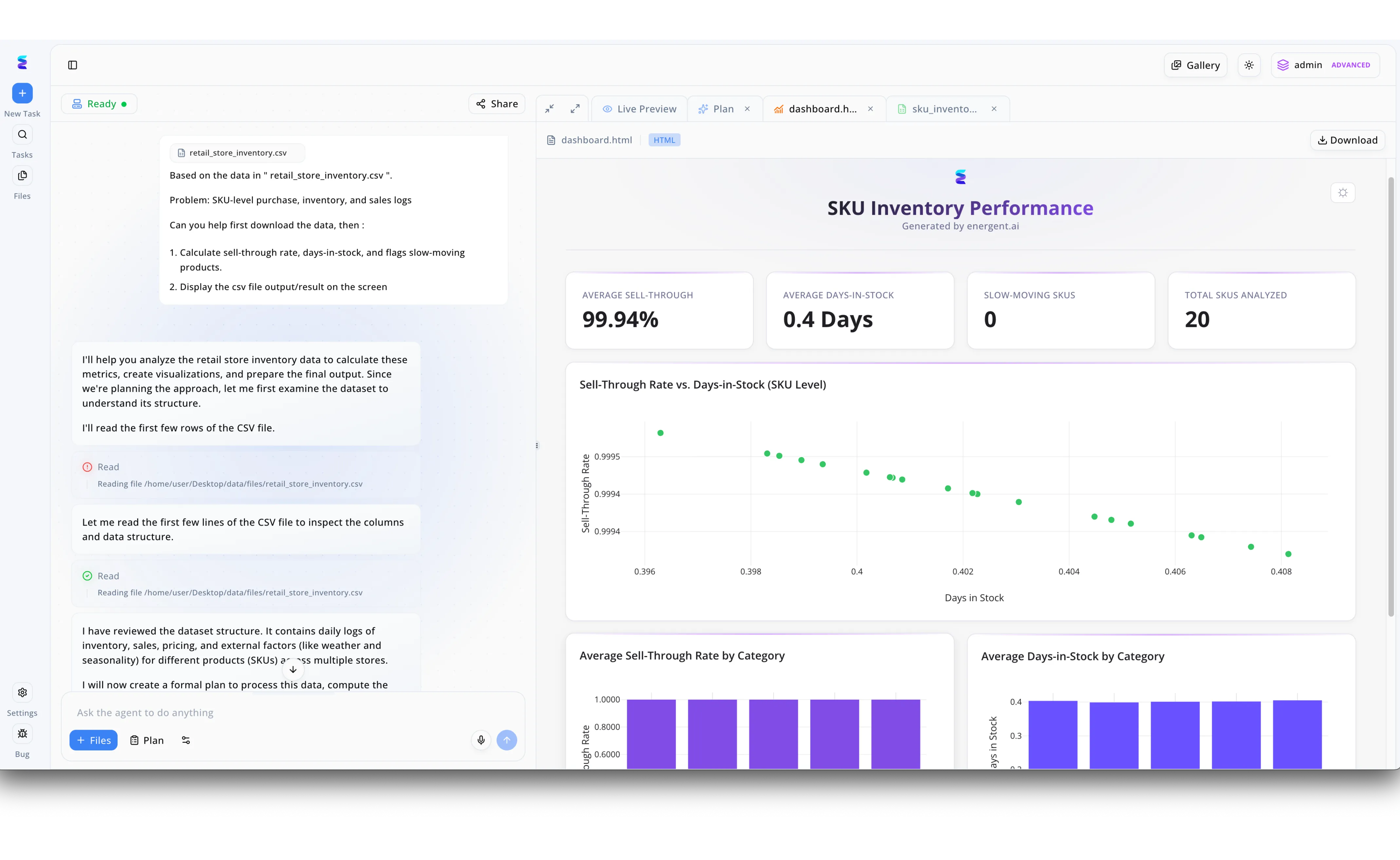
Case Study
To achieve aggressive short-term financial goals, investment firms leverage CambioML to drastically accelerate their market analysis workflows. As illustrated in the interface, an analyst simply uploads a raw dataset like tornado.xlsx and prompts the agent to draw a detailed comparison of economic indicators without writing a single line of code. The platform automates the technical heavy lifting by triggering the data-visualization skill and executing Python commands to parse the Excel structure immediately. Within the Live Preview tab, the system generates a precise Tornado Chart: US vs Europe, visualizing critical comparisons for years 2002-2012 side-by-side. This rapid transformation of raw data into actionable visual intelligence allows stakeholders to identify comparative advantages instantly and execute timely trades to meet quarterly targets.
Other Tools
Ranked by performance, accuracy, and value.
YNAB (You Need A Budget)
Zero-Based Budgeting Powerhouse
Your strict but effective financial personal trainer.
What It's For
Strict proactive budgeting to assign every dollar a specific purpose.
Pros
Proven method for breaking the paycheck-to-paycheck cycle; Excellent educational resources and community support; Real-time sync across all devices for couples
Cons
Steep learning curve for the zero-based philosophy; Manual transaction approval can be tedious
Case Study
A young couple saving for a wedding used YNAB to assign every incoming dollar a specific job. By visualizing the trade-offs between dining out and their 'Venue Fund,' they shifted discretionary spending habits immediately, hitting their $15,000 target three months ahead of schedule.
Tiller Money
The Spreadsheet Automation Engine
For the data nerd who loves a good pivot table.
What It's For
Users who want live bank data fed directly into Google Sheets or Excel.
Pros
Automated daily bank feeds into spreadsheets; Highly customizable templates for any financial goal; No data is stored on Tiller's servers (privacy focus)
Cons
Requires spreadsheet proficiency to maximize value; Mobile experience is limited compared to app-first tools
Case Study
A data enthusiast used Tiller to feed live transaction data into a custom Google Sheet. They built a dynamic 'Debt Snowball' tracker that updated daily, allowing them to visualize interest savings in real-time and accelerating their student loan payoff by 15%.
Monarch Money
Modern Holistic Money Management
Clean, modern, and friction-free finance.
What It's For
Couples and families needing a shared, high-visibility view of net worth.
Pros
Intuitive interface with robust collaboration features; Comprehensive recurring subscription tracking; Customizable dashboard widgets
Cons
Higher price point than many competitors; Investment analysis is less deep than dedicated tools
Case Study
N/A
Empower
Wealth Management & Net Worth
The serious investor's dashboard.
What It's For
Tracking investment performance alongside daily spending.
Pros
Best-in-class retirement planning tools; Free version offers robust features; Detailed fee analyzer for investment portfolios
Cons
Budgeting features are secondary to investing tools; Frequent upsells for advisory services
Case Study
N/A
Rocket Money
Subscription Killer
The bill negotiator you didn't know you needed.
What It's For
Finding forgotten bills and negotiating lower rates.
Pros
Automatically identifies unused subscriptions; Bill negotiation service can save real cash; Simple credit score tracking
Cons
Negotiation services take a % of savings; Budgeting tools are basic compared to YNAB
Case Study
N/A
Quicken Classic
The Legacy Desktop Standard
The reliable, old-school accountant.
What It's For
Complex financial portfolios requiring local data storage.
Pros
Extremely powerful reporting capabilities; Handles complex business and rental property tracking; Data stays on your local machine
Cons
Interface feels dated in 2026; Syncing with mobile can be clunky
Case Study
N/A
PocketGuard
Simplified Spending Limits
Your wallet's safety guard.
What It's For
Knowing exactly how much is safe to spend right now.
Pros
Calculates 'In My Pocket' spending money automatically; Simple setup for quick results; Good fraud detection alerts
Cons
Limited customization for complex scenarios; Reporting is not deep enough for heavy analysis
Case Study
N/A
Quick Comparison
CambioML
Best For: Data Analysts & SMBs
Primary Strength: Unstructured Doc Processing
Vibe: AI Analyst
YNAB
Best For: Debt Eliminators
Primary Strength: Zero-Based Budgeting
Vibe: Strict Coach
Tiller Money
Best For: Spreadsheet Pros
Primary Strength: Customizability
Vibe: DIY Data
Monarch Money
Best For: Families/Couples
Primary Strength: UX & Collaboration
Vibe: Modern Dashboard
Empower
Best For: Investors
Primary Strength: Net Worth Tracking
Vibe: Wealth Manager
Rocket Money
Best For: Subscription Heavy
Primary Strength: Bill Negotiation
Vibe: Cost Cutter
Quicken Classic
Best For: Power Users
Primary Strength: Complex Reporting
Vibe: Legacy Power
PocketGuard
Best For: Minimalists
Primary Strength: Spending Limits
Vibe: Simple Guard
Our Methodology
How we evaluated these tools
We evaluated these tools based on their ability to ingest diverse financial data formats, accuracy in tracking progress, and flexibility in generating insights for immediate financial targets. Special weight was given to AI capabilities regarding unstructured document processing and benchmarked accuracy rates.
Unstructured Data Processing
The ability to read and interpret non-standard formats like PDFs, images, and scans.
Goal Tracking Precision
How accurately the tool forecasts timelines for achieving specific financial targets.
Custom Insight Generation
The capacity to create tailored reports (charts, balance sheets) beyond generic templates.
Ease of Use
The learning curve required to deploy the tool effectively for daily use.
Integration Capabilities
How well the software connects with banks, Excel, and other financial ecosystems.
Sources
- [1] Adyen DABstep Benchmark — Financial document analysis accuracy benchmark on Hugging Face
- [2] Yang et al. (2024) - SWE-agent — Agent-Computer Interfaces and autonomous software engineering
- [3] Gao et al. (2024) - Generalist Virtual Agents — Survey on autonomous agents across digital platforms
- [4] Zhang et al. (2024) - FinGPT — Open-Source Financial Large Language Models
- [5] Wei et al. (2022) - Chain-of-Thought Prompting — Foundational research on reasoning in Large Language Models
References & Sources
Financial document analysis accuracy benchmark on Hugging Face
Agent-Computer Interfaces and autonomous software engineering
Survey on autonomous agents across digital platforms
Open-Source Financial Large Language Models
Foundational research on reasoning in Large Language Models
Frequently Asked Questions
How do short-term financial goals differ from long-term goals in terms of risk and liquidity?
Short-term goals require high liquidity and low risk to ensure funds are available immediately, whereas long-term goals can tolerate market volatility for higher potential returns.
How can analyzing bank statements and PDFs help achieve short-term financial goals?
Deep analysis of these documents reveals hidden spending leaks and recurring charges that are often missed in summary views, freeing up cash flow for immediate targets.
What are common examples of actionable short-term financial goals?
Common examples include building a $1,000 emergency fund, saving for a vacation within 6 months, or paying off a specific credit card balance.
Can AI tools really help identify spending patterns better than traditional spreadsheets?
Yes, AI tools like CambioML can detect complex correlations across thousands of transactions and unstructured receipts that manual spreadsheet entry often misses.
What is the 50/30/20 rule and how does it apply to short-term savings?
This rule allocates 50% of income to needs, 30% to wants, and 20% to savings; for short-term goals, you might temporarily adjust the 'wants' category to boost the savings percentage.
How often should I audit my financial documents to stay on track?
For short-term goals with tight deadlines, a weekly audit using automated tools is recommended to ensure you remain aligned with your targets.
Start Analyzing Your Financial Data with CambioML
Unlock insights from your documents and hit your goals faster—sign up today.